
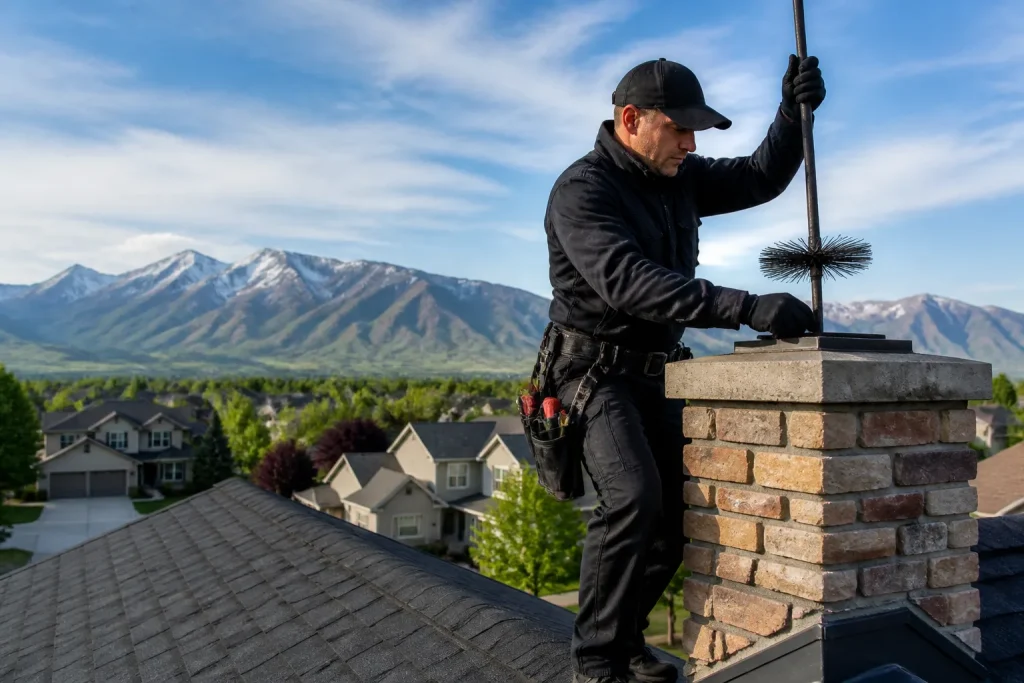
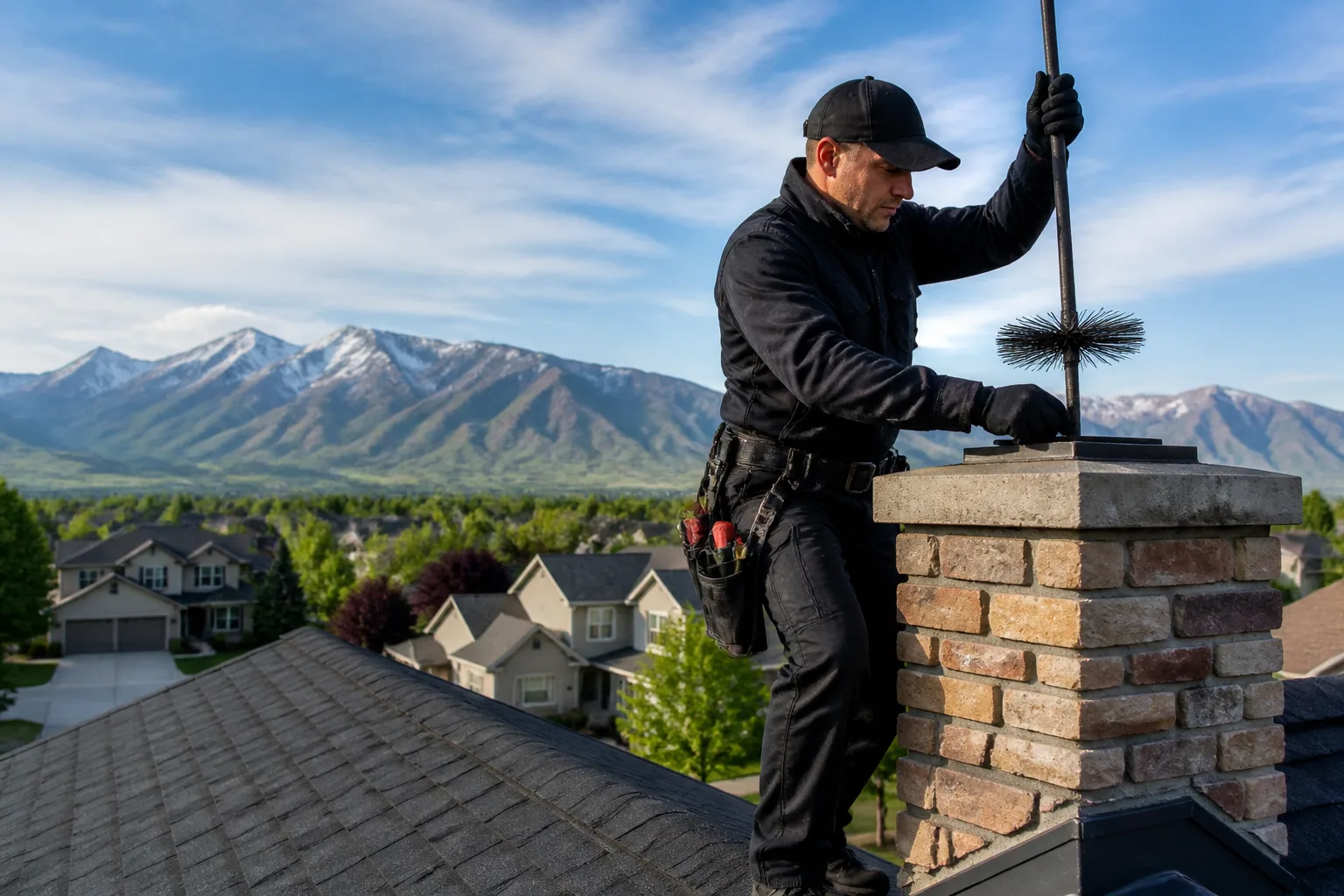
DuraFlex Chimney Sweep in South Jordan: A Homeowner’s Guide
Most homeowners who approve a DuraFlex liner installation never learn one thing: the wrong stainless grade or an undersized diameter can void the appliance warranty and choke the draft. The spec sheet matters as much as the crew doing the work. This guide walks through the alloy grades, how diameter gets calculated, what a proper install looks like end to end, and the warranty terms worth reading before you sign. If you’d rather have a specialist handle it, call (833) 508-9471.
What Is a DuraFlex Chimney Liner, and Why Does South Jordan Care?
A DuraFlex liner is a flexible stainless steel tube that drops down the inside of your existing chimney to give vented appliances a sealed, correctly sized path for exhaust. In South Jordan, where winter fireplace use runs long and the housing stock includes everything from newer builds to homes with aging masonry flues, a liner is often the difference between a chimney that vents safely and one that leaks smoke, creosote, and carbon monoxide into the house. The flexible construction matters because most South Jordan flues aren’t straight – they offset, jog around framing, and take bends that a rigid pipe can’t follow without major demolition.
DuraFlex is one of the professional-grade brands we stock and install, alongside Olympia Chimney and Copperfield components. What separates it from a generic flexible liner is the alloy selection and the fact that it’s engineered as a complete system – liner, insulation, connection collar, and top termination cap designed to work together. When those parts come from one manufacturer, the install holds up. When they’re mixed from a bargain bin, the seams are where problems start.
Here’s the honest part: a liner is a long-term investment, and the material choice should follow your appliance, not the other way around. A wood insert, a high-efficiency fireplace, and a gas appliance each have different venting demands. We assess the fuel type first and pick the liner second.
DuraFlex 316Ti vs. 304: Which Grade Fits Your Fuel?
This is the question most homeowners never ask, and it’s the one that matters most. DuraFlex comes in two stainless alloy grades, and they are not interchangeable.
- 316Ti (titanium-stabilized): Rated for wood, pellet, oil, and most solid-fuel appliances. The titanium stabilization resists chloride attack and the corrosive condensate that forms when wood burns and cools. If you burn wood in South Jordan, this is the grade to specify.
- 304: A general-purpose stainless suited to certain gas and lower-corrosion applications. It’s a fine material, but it’s not the right choice for a busy wood-burning flue where acidic creosote condensate is a fact of life.
Putting 304 in a wood appliance is a common shortcut, and it’s the kind of thing that shows up years later as pitting and premature failure. The reverse mistake – spec’ing 316Ti for a low-acid gas setup – isn’t dangerous, but it’s money spent on corrosion resistance you don’t need. Either way, the grade should match the fuel. We confirm the appliance type and fuel before quoting, because a liner installed for the wrong fuel is a liner that fails early.
If you’re unsure what’s currently in your flue, that’s exactly what a proper inspection and sweep will reveal. South Jordan homes with older masonry chimneys are the ones where the grade question comes up most often.
Why a Pre-Installation Sweep Is Not Optional
No reputable installer drops a liner into a dirty flue. A chimney sweep before the job isn’t a formality – it’s the baseline that determines whether a liner can go in at all, and what size and shape it needs to be.
Here’s what the technician is actually checking during that pre-install sweep:
- Creosote level and type: Glazed, tar-like creosote means the flue needs more than a brush-down before any liner goes in.
- Flue integrity: Cracked or spalling masonry tile can catch and tear a flexible liner during the drop, and it can also mean the flue needs resurfacing first.
- Offsets and dimensions: The technician measures every turn so the liner is cut and shaped to fit the actual path, not a spec sheet average.
- Obstructions: Nests, debris, and even a dislodged tile can block the drop. Sweeping clears the path.
If the flue is sound but the tile is cracked, a resurfacing method like HeatShield can restore it without full replacement – a repair option that comes before the costlier relining step. If the flue is beyond resurfacing, the DuraFlex liner is the answer. Either way, the sweep tells you which path you’re on. In our experience, this is the step homeowners most often skip when they call a general handyman, and it’s where jobs go sideways.
How Liner Diameter Is Calculated (It’s Not Guesswork)
The diameter of your liner is calculated, not eyeballed. Too small and the appliance won’t draft; too large and exhaust cools too fast, which leads to condensation and creosote buildup. The calculation depends on three things:
- Appliance BTU output: A higher-output wood insert needs a larger flue cross-section to move the volume of exhaust.
- Flue height: A taller chimney in a South Jordan home has more draft potential, which changes the sizing math.
- Appliance type and manufacturer spec: Many appliance makers publish a required minimum flue size. Ignoring it can void the warranty.
The installer runs the numbers from the appliance spec sheet and the measured flue, then selects the liner diameter that matches. A shortcut installer skips this and installs whatever fits. That’s where undersized liners and poor draft come from. Ask your installer to show you the calculation. It’s not a secret, and a specialist will walk you through it without hesitation.
What a Proper DuraFlex Installation Looks Like, Top to Bottom
A correct install is a complete system, and every component should be there. Here’s the sequence you should expect:
- Connection collar: At the appliance, a proper collar seals the liner to the flue opening so no exhaust escapes back into the room.
- Insulated liner body: The flexible steel tube runs the full height of the flue, with insulation wrap to keep exhaust hot and protect against contact with masonry.
- Top termination cap: At the crown, a dedicated cap – often a Gelco or Famco component – seals the top, keeps rain and animals out, and terminates the liner correctly.
- Support and spacing: The liner is supported at the top and kept clear of the flue walls so it doesn’t rub or crimp.
If any of these pieces is missing or mismatched, the system isn’t what it should be. We check each stage against the manufacturer’s installation instructions, because that’s also what the warranty depends on. A cap and crown that seals properly is part of the job – not an upsell bolted on at the end.
If your fireplace itself needs work before or after the liner goes in, fireplace repair is handled as part of the same specialty service, so you’re not juggling contractors.
DuraFlex Warranty Terms (and What Can Void Them)
DuraFlex warranties are real, but they’re conditional. Understanding the terms before the install protects your investment.
- Proper alloy for the fuel type: Installing a 304 liner in a wood appliance can void coverage. The grade has to match the application.
- Professional installation: Most warranties require installation by a qualified professional following the manufacturer’s instructions.
- Insulation and component compatibility: Using non-approved insulation or mismatched caps can void coverage.
- Pre-install condition: A flue that should have been repaired before lining – cracked tile the liner was expected to seal – can trigger denial.
The pattern is simple: the warranty rewards doing it correctly and punishes shortcuts. We install to the spec, and we keep the paperwork clear so you know what you’re covered for. Since we work directly with DuraFlex as an authorized installer, the material and the install are both on record.
When to Call a Pro
If your fireplace smokes, your draft is weak, or your inspection turned up cracked tiles, that’s a call-a-specialist moment. Liners, alloy selection, and diameter calculation are not weekend DIY territory – and the safety stakes (carbon monoxide, chimney fire) mean the material has to be right. Our technicians have up to 10 years of experience on exactly this work, and we handle chimney repair and liner work as one specialty service.
Related services in South Jordan: Chimney Sweep South Jordan for full-service chimney and fireplace care, from sweeping to liner installation.
The Bottom Line
A DuraFlex liner is a performance upgrade, not just a repair, and the spec sheet is where its long-term value is decided. Match the alloy to your fuel, let the diameter be calculated, insist on a pre-install sweep, and check the warranty conditions before you sign. If you’re in South Jordan and need help, Chimney Sweep South Jordan offers free estimates and works with the brands professionals trust – call (833) 508-9471. We answer 24/7, with fast dispatch from 7am to 7pm, Sunday through Friday.
Frequently Asked Questions
Liner cost depends on flue height, diameter, alloy grade, and whether insulation and a new top cap are needed. We give a written estimate that sets the final price before any work begins. Call (833) 508-9471 for a free estimate tailored to your appliance and flue.
316Ti is the correct grade for wood-burning appliances because its titanium stabilization resists the corrosive condensate wood produces. 304 is suited to certain gas and lower-corrosion applications. Call (833) 508-9471 and we’ll confirm which grade your fuel type requires.
Sometimes yes, but only after the flue is assessed. If the tiles are sound enough, a HeatShield resurfacing may restore the flue first. If not, the liner is the right repair. We inspect before we install, and you’ll see the evidence. Call (833) 508-9471 to book an inspection.
Yes. A pre-installation sweep is mandatory – it clears obstructions, measures the flue path, and confirms the flue is sound enough to accept a liner. Skipping it invites a failed install. Call (833) 508-9471 to schedule a sweep and liner assessment together.
Written by the team at Chimney Sweep South Jordan.
Need Chimney Cleaning Help?
Call Chimney Sweep South Jordan - the local pro we connect you with is licensed and insured, here with fast help in South Jordan.
(833) 508-9471